 Ribeira Grande is where the history of Cape Verde begins. It was here the Fort Real do Sao Filipe was built 1585 sacking and intended to guard primarly against attack from overland. Its extraordinarily thick wall were build with brick from Lisbon; its turrets with their little windows give a wide view over the Atlantic and the village. Ribeira Grande is where the history of Cape Verde begins. It was here the Fort Real do Sao Filipe was built 1585 sacking and intended to guard primarly against attack from overland. Its extraordinarily thick wall were build with brick from Lisbon; its turrets with their little windows give a wide view over the Atlantic and the village. |
| Add caption |
Gateway entrance
 |
| Water cistern within the Fort's walls |

Canons are ready for firing
 |
| Original ramp for canons to go and up down the walls |

Small pits are for 10 prisoners

Looking south towards the city

Cathedral--Inside are the remains of its 1m-thick walls, begun by the third bishop of Cape Verde, Francisco da Cruz, in 1556.
 |
| Add caption |
From the west side of the Fort, the lush valley of trees, plantations, and fresh bananas, mangos, papayas, and sugar cane.
Today archaeologists are trying to piece together what the city was like. Origins of Cape Verdean culture, the histor of slavery, and on Jesuit history as well.

In 1676, the ambitious original plans were scaled down and it was proposed to build only a sanctuary about 24m long . But the energetic Bishop Vitoriano Portuense, who arrived in 1688, returned to the original design and it was completed in 1693. Its life was short, however, in 1712, it was attacked and virtually destroyed by French pirate Jacques Cassard.
 PELOURINHO This 16th-century pilory was used for punishment of slaves. It is arresting symbol of inhumanity.

Igreia e Convento de Sao Francisco Built about 1640 as monastery
 Farmer's market in downtown Mindelo


 Mindelo Branch, Chapel is upstairs
 Presidential Palace
 Night scene of Mindelo


 FLOWERS GROWN AT GAS STATION

 Ribeira Grande is where the history of Cape Verde begins. It was here the Fort Real do Sao Filipe was built 1585 sacking and intended to guard primarly against attack from overland. Its extraordinarily thick wall were build with brick from Lisbon; its turrets with their little windows give a wide view over the Atlantic and the village.

 Canons are ready for firing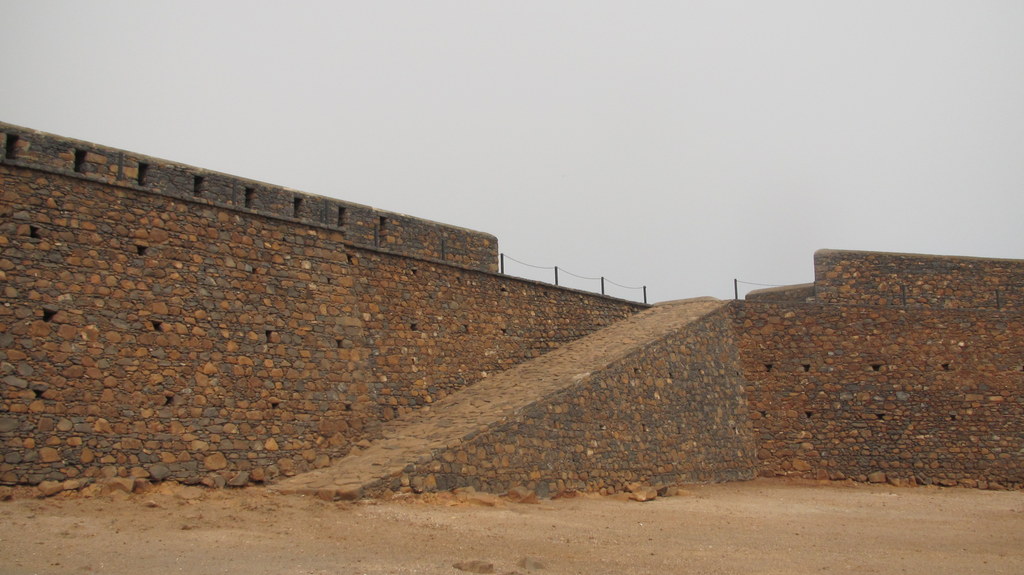
 Small pits are for 10 prisoners
 Looking south towards the city
 Cathedral--Inside are the remains of its 1m-thick walls, begun by the third bishop of Cape Verde, Francisco da Cruz, in 1556.


 In 1676, the ambitious original plans were scaled down and it was proposed to build only a sanctuary about 24m long . But the energetic Bishop Vitoriano Portuense, who arrived in 1688, returned to the original design and it was completed in 1693. Its life was short, however, in 1712, it was attacked and virtually destroyed by French pirate Jacques Cassard.
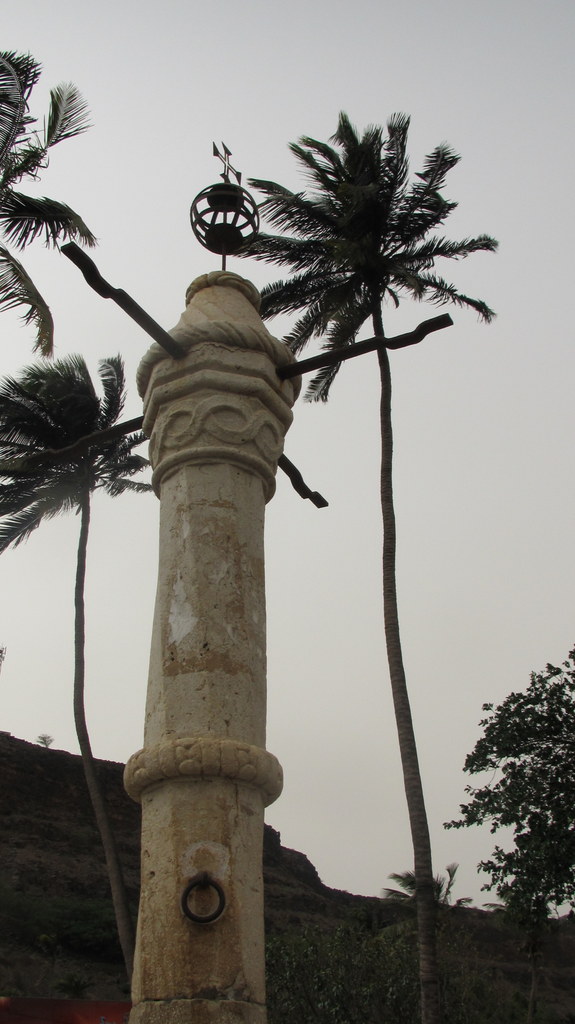 PELOURINHO This 16th-century pilory was used for punishment of slaves. It is arresting symbol of inhumanity.
 Igreia e Convento de Sao Francisco Built about 1640 as monastery

